

Last Updated: November 12, 2026
Quick Summary
To read skincare ingredient labels, start with the first three to five items, since they make up most of the product, and remember the list runs in descending order of concentration only for ingredients above 1%. Below that line, order is not reliable. Learn the INCI names, check each active ingredient, and patch test new products before using them widely.
- Ingredients above 1% are listed in descending order of concentration.
- Ingredients at or below 1% may appear in any order.
- Water listed first is normal for most water-based creams and lotions.
- Patch test on the inner forearm or behind the ear for 24 hours first.
- Introduce one new product at a time to identify any reaction.
Table of Contents
- How Cosmetic Ingredients Are Listed on the Label
- Step 1 to 3: Decode INCI Names and Find the Active Ingredients
- Step 4 to 5: Compare Ingredients Using a Skincare Ingredient Checker
- Reading Ingredient Labels in English and Other Markets
- Skincare Ingredients to Avoid and How to Spot Irritants
- Test Your Next Bar or Oil Before Committing to a Full Routine
- Frequently Asked Questions
How Cosmetic Ingredients Are Listed on the Label
Ingredient labels are the most honest part of any skincare bottle, yet most shoppers skip them. Learning to read the list is the fastest way to know what you are putting on your face.
Ingredients are listed in descending order of concentration (the FDA). The first item makes up the largest share of the product, and each subsequent item is present in a smaller amount than the one before it. That single rule is the backbone of label reading, but it has a well-known limit, covered below, that trips up almost everyone who tries to estimate how much of an ingredient a product actually contains.
Why water is usually listed first
Water, often written as "aqua" or "water," is listed first in most creams, lotions, serums and gels that contain it. This is normal and not a red flag. Water is the base of most water-based formulas, so it genuinely is the largest single component. An oil-based product is different: a facial oil or balm often lists an oil first because it contains little or no water.
Watch the first three to five ingredients. They tell you what the product is mostly made of. If a fragrance, a single botanical extract, or a "star" active sits in that top block, it is a major part of the formula by weight. If the same ingredient appears near the end, it is present in a small amount, which is not automatically bad, but it does change what you should expect from it.
Order tells you about concentration, not about how the product will behave on your skin.
The 1% threshold and low-concentration ingredients
Here is the part most label guides gloss over. Ingredients present above 1% are generally listed in descending order of concentration. Ingredients present at or below 1% may be listed in any order after the main ingredients, the descending rule no longer applies to them.
That single exception has real consequences for how you read a label:
- You cannot rank the bottom of the list. If niacinamide, a preservative and a fragrance all appear after the main ingredients, the label does not tell you which is present in the larger amount. Any of them could be at 0.9% or 0.05%.
- A costly-sounding ingredient near the bottom may be there in a tiny amount. Botanicals, peptides and "complex" blends are sometimes dosed at fractions of a percent.
- A low percentage is not the same as useless. Preservatives work at well under 1%. So do some antioxidants, pH adjusters, chelators and fragrance components. Their job is to keep the formula stable and safe, not to transform your skin.
- The threshold is a labeling convention, not a performance cutoff. The 1% line tells you about order, not about efficacy.
A common pattern is that the ingredients you most want to evaluate, the actives, sit either just above the 1% line (where order is meaningful) or somewhere in the unordered block below it (where it is not). When an active appears above the threshold, its position relative to other actives is genuinely informative.
What the order cannot tell you
Even a perfectly ordered label is a snapshot of concentration, not of performance. It does not tell you the pH of the formula, whether an active is encapsulated or free, how the ingredients interact, or how much of anything actually penetrates your skin. Two products can list identical ingredients in identical order and behave completely differently. Treat the list as the starting point for a question, "is this ingredient here in a meaningful amount, and in a form that works?", rather than as the answer.
The list follows a convention that shows which ingredients dominate a product and where the reliable part of the order ends.
| Label position | What it tells you | Limit |
|---|---|---|
| Above 1% | Listed in descending order of concentration | Order shows concentration, not performance |
| At or below 1% | May appear in any order | Cannot rank these ingredients on the label |
| First three to five items | Make up most of the product | Says nothing about how it behaves on skin |
| Water or aqua listed first | Normal base for water-based formulas | Not a red flag |
| Oil listed first | Typical for facial oils and balms | Little or no water present |
| Preservatives and fragrance near bottom | Usually present in small amounts | Small amount is not automatically bad |
Step 1 to 3: Decode INCI Names and Find the Active Ingredients
The International Nomenclature of Cosmetic Ingredients, known as INCI, is the standard naming system used on labels. Once you know how to read it, the list becomes far less intimidating.
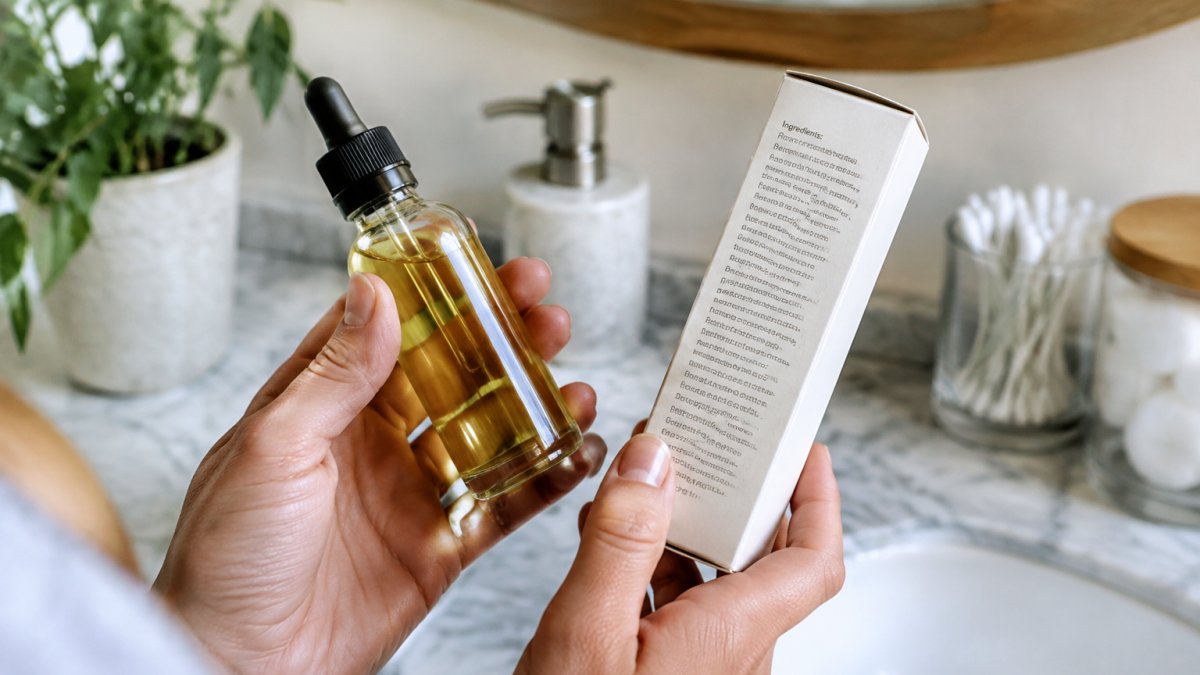
- Step 1: Read the first five ingredients. These make up most of the product.
- Step 2: Learn the INCI names. Plant oils often appear with Latin botanical names, such as Helianthus annuus for sunflower.
- Step 3: Spot the active ingredients. These are the ingredients meant to treat a concern, like hydrating glycerin or soothing aloe.
Understanding INCI and botanical names
INCI names can look strange, but many follow a pattern. "Oil" or "butter" at the end usually tells you the source. Botanical names use a genus and species, which can be confusing at first. Think of them as the scientific equivalent of a common name, used so every brand speaks the same language worldwide.
Many shoppers also run into the word "parfum." This term covers fragrance blends that may include many undisclosed ingredients, so a product listing "parfum" is not fully transparent.
Step 4 to 5: Compare Ingredients Using a Skincare Ingredient Checker
Once you have pulled out the key ingredients, compare them. A skincare ingredient checker can help you look up what each one does. These tools are useful, but they have limits. They rarely show concentration, and they cannot tell you how your own skin will react.
- Step 4: Look up each active ingredient in a trusted reference.
- Step 5: Compare two products side by side to see which one lists better-supporting ingredients higher up.
A good habit is to compare products with similar goals. For example, two facial oils for dry skin should both show moisturizing ingredients near the top of the list.
Reading Ingredient Labels in English and Other Markets
Ingredient rules differ between countries. In the United States, labels should list ingredients in English or with English names, though some products also show translations. If you shop imported products, you may see names in other languages. Use the INCI name to match them, since INCI names stay the same across markets.
Be aware that marketing claims on the front of a package are not regulated the same way the ingredient list is. Always check the back of the box for the actual formula.
Skincare Ingredients to Avoid and How to Spot Irritants
Most "ingredients to avoid" lists are too blunt to be useful. An ingredient that irritates one person may be fine for another, and the same ingredient can be gentle in one formula and harsh in another depending on concentration, pH and what it is paired with. Instead of memorizing a blacklist, learn which categories are worth a closer look and how to test a product before it becomes a problem.
Categories worth a closer look
- Fragrance and "parfum." Fragrance is one of the most common causes of contact reactions in cosmetics. Because "parfum" is an umbrella term, the label may not disclose the individual components, so a reaction can be hard to trace. Fragrance-free products are the safer starting point for reactive skin.
- Essential oils. Essential oils are natural, but "natural" is not the same as "non-irritating." Rinse-off products are generally lower risk than leave-on ones.
- Alcohol denat. near the top. Denatured alcohol can be drying and disruptive to the skin barrier when it is a major component of a leave-on formula. Lower in the list, it may simply be a solvent doing a small job.
- Exfoliating acids and retinoids. These are not "bad", they are active ingredients that do real work and can also cause irritation, especially in the first weeks of use. The issue is usually dose and frequency, not the ingredient itself.
- Preservatives. Preservatives prevent mold and bacteria, and a product without them is a bigger risk than one with them. Some people do react to specific preservatives; if you have reacted before, note which one and look for it on future labels.
- Ingredients you have reacted to before. This is the most important category, and the one no generic list can supply. Keep a simple note of products that caused redness, stinging, itching or breakouts, and check new labels against it.
Why context matters more than the name
An ingredient's effect depends on how much is present, what form it is in, the pH of the formula, whether the product is rinsed off or left on, and what else is in the bottle. A small amount of fragrance in a cleanser that gets rinsed away is a different proposition from the same fragrance near the top of a leave-on serum. A buffered acid at low concentration is not the same as a high-strength peel. Reading the label in context, order, product type, and the rest of the formula, will serve you better than any single-ingredient verdict.
Patch testing before you commit
If you have allergies, eczema, rosacea or a history of reactions, patch testing is worth the extra week. A practical approach:
- Apply a small amount to a discreet area, the inner forearm or behind the ear, and leave it for 24 hours.
- If there is no reaction, repeat on a small area of the face for two to three days before using it more widely.
- Introduce one new product at a time so you can tell what caused a reaction if one appears.
- Stop using any product that causes redness, stinging, swelling or persistent itching, and note the full ingredient list for future reference.
Watch out: patch testing reduces risk but does not eliminate it, and a reaction can appear days after first use. If you have a known allergy or a persistent skin concern, a qualified clinician, such as a dermatologist or allergist, can help you identify triggers more reliably than label reading alone.
The limits of ingredient-checker apps
Ingredient-checker tools and databases can translate INCI names and flag common irritants, which makes them useful for decoding unfamiliar terms. They have real limits, though: they usually do not know the concentration, the pH, the formulation, or your personal history, and they often rate ingredients in isolation rather than in the context of a finished product. Use them as a glossary, not a verdict, and let your own patch test have the final say.
Test Your Next Bar or Oil Before Committing to a Full Routine
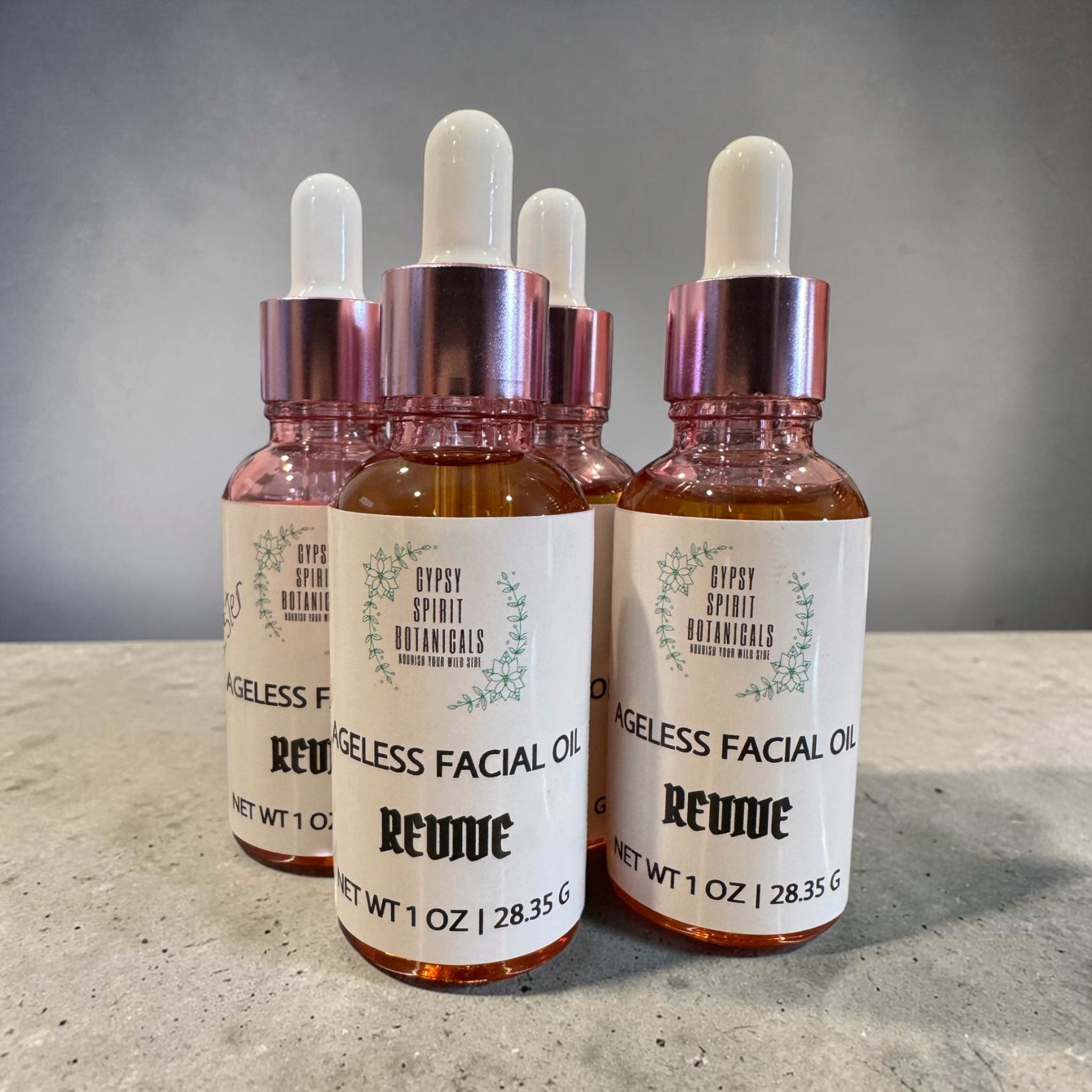
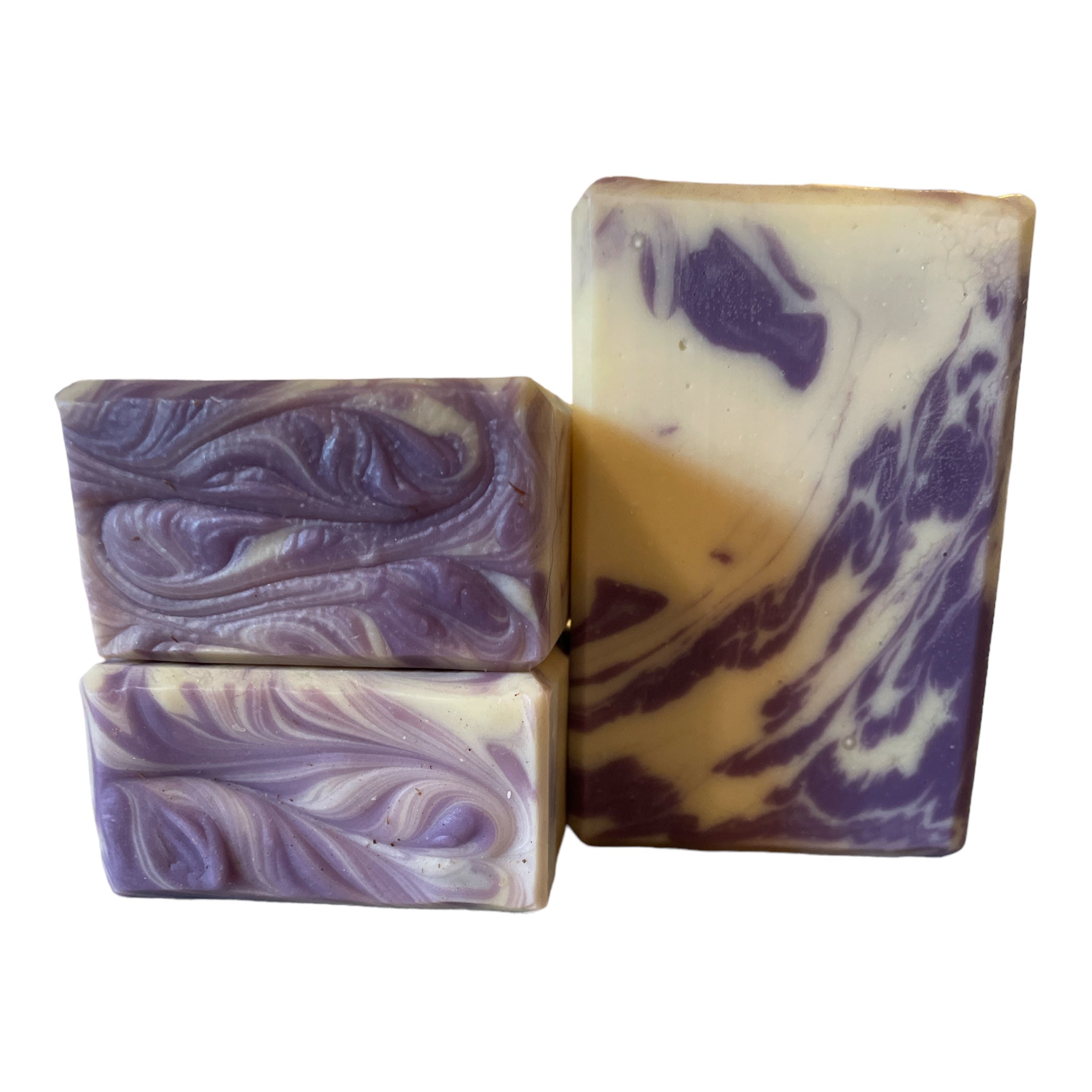
The best way to learn your skin is to test slowly. Our Revive facial oil is a herb-based formula you can try to see how your skin responds. Browse the Revive facial oil to review its full ingredient list before you buy. Our Unscented Handcrafted Soap is also a simple way to try our products before building a full routine. Explore the Unscented Handcrafted Soap and read its short ingredient list.
Reading labels is a skill, and it gets easier with practice. Start with the first five ingredients, check the names you do not recognize, and test new products carefully. Shop with the label in mind, and your skin will thank you.
Frequently Asked Questions
How do I read an ingredient list on a skincare product?
Start at the top. Ingredients are listed in descending order of concentration, so the first few items make up most of the formula. Water, or aqua, often appears first in lotions and creams. Ingredients below about 1% can appear in any order after that point. Look for the INCI name, which is the standardized English name used across markets, and compare it against the botanical or common name you recognize. The Revive facial oil lists grapeseed oil and argan oil among its ingredients.
What does INCI mean on a skincare label?
INCI stands for International Nomenclature of Cosmetic Ingredients. It is a standardized system of names that lets shoppers compare products regardless of language or brand. For example, the plant oil you know as lavender essential oil may appear under its INCI botanical name on the label. Learning a few common INCI patterns, such as names ending in -ate or -ide, helps you recognize preservatives, emulsifiers, and salts more quickly when you read a product.
Can a skincare ingredient checker tell me whether a product is safe?
A skincare ingredient checker can tell you what an ingredient is and how it is generally used, but it cannot tell you whether a product will suit your skin. Checkers do not know your personal sensitivities, your skin type, or how an ingredient performs in a specific formula. Use a checker as a starting point, then patch test new products on a small area of skin for several days before using them on your face or body. If you have a medical condition or take medication, consult a healthcare provider.
What skincare ingredients should I avoid if I have sensitive skin?
Common irritants and sensitizers to consider include synthetic fragrance or parfum, some essential oils at high concentrations, and certain preservatives. Fragrance is especially worth checking because it is often listed as one word that hides many compounds. Alcohol denat. and strong exfoliating acids can also sting sensitive skin. The Simply Goatmilk Handcrafted Soap is unscented and has no added colorants, and it is suitable for sensitive skin.
